

Why grief can feel different in the second year
Many widows and widowers enter the first year after the death of a spouse believing that if they can just make it through the first twelve months, life will somehow begin to get easier.
Sometimes it does.
But for many people, the second year brings its own unexpected challenges.
That does not mean you are going backward. It does not mean you are grieving incorrectly. Grief changes as life changes, and sometimes the realities of loss become clearer only after the shock of the first year begins to lift.
The First Year: Learning to Survive
The first year can feel like simply trying to get through one day at a time.
There may be shock and disbelief, along with countless practical responsibilities: paperwork, finances, household decisions, appointments, family matters, and responsibilities once shared with your spouse.
At the same time, emotions can change from hour to hour or day to day.
Sadness. Anger. Guilt. Loneliness. Confusion. Relief. Fear. Exhaustion.
Sometimes laughter is followed unexpectedly by tears.
Much of the first year is spent learning how to live in a world that suddenly feels unfamiliar.
And then the calendar turns.
But grief does not know that a year has passed.
The Second Year Can Feel Different
During the second year, the numbness or shock that helped carry you through some of the early months may begin to fade.
Life may become quieter.
Other people may return to their routines.
And the permanence of the loss can become increasingly real.
Questions may begin to surface:
Is this really my life now?
Why do I still feel so lonely?
Why does everyone else seem to be moving forward while I feel stuck?
Why is being around couples sometimes so difficult?
Can I manage all these responsibilities on my own?
What should I do about my finances?
Are my children or grandchildren struggling too?
Should I move? Stay? Retire? Go back to work?
Will life ever feel meaningful again?
These are not signs of failure.
They are questions that can come when a person begins trying to understand what life will look like now.
This may be an especially important time to have people around you who understand grief—a trusted friend, counselor, pastor, support group, or other widows and widowers who have walked a similar road.
You do not have to answer every question at once.
When Others Think You Should Be “Better”
During the first year, friends and family may lower their expectations.
Someone else may host the holiday meal. People may understand when you decline invitations. They may offer help with meals, errands, household responsibilities, or paperwork.
As more time passes, some of that support may gradually disappear.
People may assume you are ready to return to life as it was before.
But you know something they may not understand:
There is no going back to life exactly as it was.
You are learning how to live a life that has been profoundly changed.
When your healing does not match someone else’s timetable, it is easy to wonder whether you are doing something wrong.
You are not required to grieve according to someone else’s calendar.
The Losses That Come After the Loss
The death of a spouse is the primary loss, but it often creates many other losses that become apparent over time. These are sometimes called secondary losses.
You may not recognize all of them in the beginning because you are simply trying to survive.
Later, they become clearer.
Loss of Financial Security
Financial circumstances may change dramatically after the death of a spouse.
Income may decrease. Expenses may change. Savings used during the first months may not be sustainable long-term.
Decisions that were once made together now fall on one person.
You do not have to understand everything immediately. Asking for trustworthy financial guidance can be an important step.
Loss of Identity
At some point, a difficult question may arise:
Who am I now?
For years, perhaps decades, you were part of a couple.
Husband and wife.
Partners.
Friends.
Parents and grandparents together.
Then suddenly forms ask whether you are married, single, or widowed. Even a simple checkbox can remind you that something fundamental has changed.
Discovering who you are now does not mean forgetting who you were with your spouse.
Both can remain part of your story.
Loss of Confidence
Your spouse may have been the person you talked things through with—the one who listened, offered another perspective, helped make decisions, or simply reassured you.
Without that familiar voice beside you, even ordinary decisions can feel heavier.
Am I making the right choice?
Can I handle this?
What if I make a mistake?
Confidence often returns gradually.
Until then, asking for help is not weakness. It is wisdom.
Loss of Hopes and Dreams
This may be one of the most painful secondary losses.
You expected a future to share.
Travel.
Retirement.
Family celebrations.
Ordinary mornings.
Growing older together.
The loss is not only of the person you loved. It is also the loss of many plans, dreams, traditions, and everyday moments you expected to share.
Those losses deserve acknowledgment too.
Grief Needs a Voice
Grief carried silently can become very heavy.
Find safe ways to give your grief a voice.
Talk with someone you trust.
Write in a journal.
Meet with a grief counselor.
Join a support group.
Pray.
Spend quiet time reflecting.
Talk about your spouse and the life you shared.
And when tears come, let them come.
There is no prize for pretending you are stronger than you feel.
You Are Still Becoming
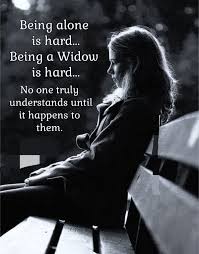
Being widowed changes life in ways few people fully understand until they have experienced it themselves.
The first year can be difficult.
The second year can be difficult in different ways.
And grief does not suddenly disappear because another anniversary passes.
But something else can happen over time.
You begin learning.
You begin adjusting.
You discover that you can do things you once thought impossible.
You begin making decisions again.
You may find yourself laughing without feeling guilty.
You may discover new friendships, new purpose, and even moments of joy.
None of that means you have left your spouse behind.
It means you are learning how to carry your love and your memories with you while continuing to live.
There is no timetable for this journey.
There is no requirement that you have everything figured out.
For today, one small step is enough.
And you do not have to take that step alone.
You are seen. You are valued. You are not alone.